FORT-BEND-SEAL_155x155.png
Image
“As we all know there is increased anxiety and worry about the impact of the Coronavirus (COVID-19) on our lives. We worry about the impact on our families, ourselves and our community. Managing the anxiety and worry is important.
The fear and anxiety can be overwhelming at times and may impact our ability to take care of our daily responsibilities. Each one of us will react differently based on our own history, coping strategies and nature of our “worries”. We need to be aware that some of this anxiety and worry is “situational” and with healthy coping strategies such as : eating right, getting enough sleep, stay connected with our support systems, engaging in physical activity, and keeping things in perspective, we can manage the anxiety. However, we also need to be mindful and aware that we may need additional supports and even professional help if the feelings become overwhelming. “
- Dr. M. Connie Almeida, Director of Behavioral Health Services
Fort Bend County Behavioral Health Services
COVID-19 and Your Mental Health
Fort Bend County
Resource Line
During these times of uncertainty, it is likely that individuals will be experiencing excessive anxiety / worry and other mental wellbeing concerns and have questions about mental health resources, please call
281-238-3079
Calls answered Monday thru Friday: 8:00am to 5:00pm
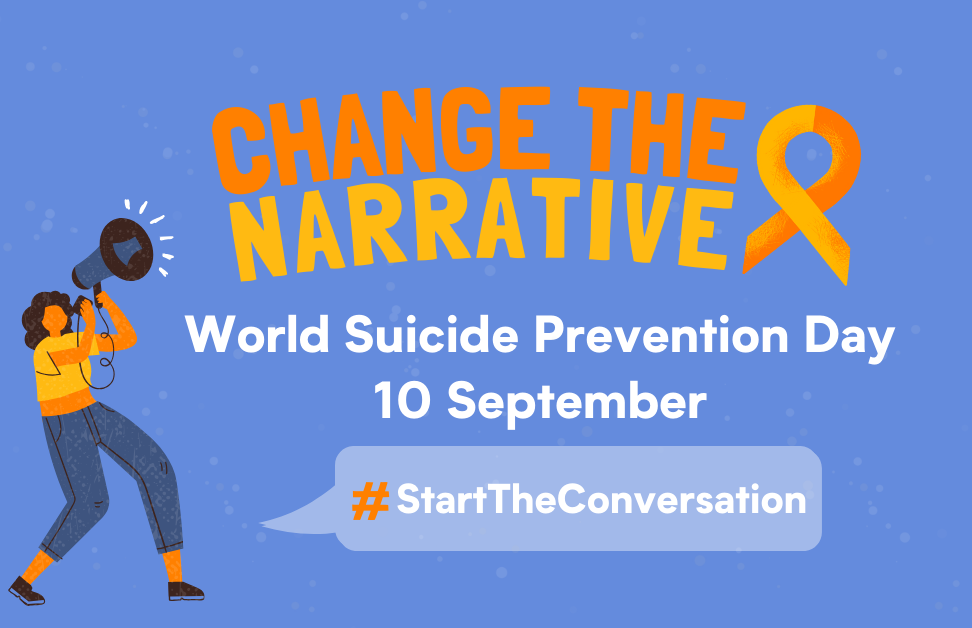
September 10th is World Suicide Prevention Awareness Day
From the World Health Organization:
Suicide is a major public health challenge, claiming the lives of more than 720 000 people every year. Each life lost has profound social, emotional, and economic consequences, deeply affecting families, friends, workplaces, and entire communities around the world.
2026 marks the third and final year of the triennial theme for World Suicide Prevention Day (2024–2026), Changing the Narrative on Suicide, with the call to action: Start the Conversation. This theme calls on us all to challenge harmful myths, reduce stigma, and foster open, compassionate conversations about suicide. It is about shifting from silence and misunderstanding to openness, empathy, and support, creating environments where people feel able to speak up and seek help.
Changing the narrative also means driving systemic change. It calls for suicide prevention and mental health to be a priority in public policy, urging governments and institutions to take action. This includes developing and implementing evidence-based strategies, improving access to quality care, and ensuring that those in distress receive the support they need.
For more information, visit World Suicide Prevention Day 2026
September is Suicide Prevention Awareness Month
September is Suicide Prevention Awareness Month. This year, the Substance Abuse and Mental Health Services Administration’s (SAMHSA) theme is Stronger Together: Connect. Support. Prevent. Suicide prevention is not one moment or one person's job. It lives in the relationships we build, the support we offer, and the communities we create together. This year’s theme highlight’s the importance of:
• Strengthening connections that protect people before a crisis occurs
• Making sure everyone knows where to turn and knows it before they need it
• Building communities where people feel safe reaching out for help
• Supporting recovery and healing long after a crisis has ended
Suicide prevention touches every part of life – from families and schools to workplaces, faith communities, and health care systems. When people feel connected, valued, and supported, they are more likely to seek help. And when communities come together around a shared commitment to prevention, lives are saved.
Join us and take action to help prevent suicide. Every conversation, every connection can make a difference. Follow SAMHSA all month for resources and ways to connect, support, and prevent: samhsa.gov/about/digital-toolkits/suicide-prevention-month/toolkit
Strengthening Suicide Prevention Together
The people in our lives can be a lifeline. Strong relationships and trusted connections help protect people when life gets hard. Knowing the warning signs of suicide, in adults and in children and teens, means being able to recognize when someone needs support and connect them to help sooner. Prevention is everyone’s responsibility, not just one organization’s. Families, schools, workplaces, faith communities, health systems, and individuals all have a role to play. Small acts of connection, such as a check-in, a shared resource, a moment of genuine attention, are how communities take care of each other.
Start the conversation. Talking openly about suicide reduces stigma and helps people ask for help. Here is how: samhsa.gov/find-support/helping-someone/how-to-talk-to-someone-about-help
Crisis Services
A real person answers every call, text, and chat to 988. The support is free, confidential, and available any time of day or night. 988 is there for anyone who is struggling, not only for people in a full crisis. Feeling overwhelmed or in emotional pain is reason enough to reach out. 988 is available in Spanish, for Veterans, for deaf and hard of hearing callers via ASL Videophone and chat, and in more than 150 languages. Help is there for everyone. Knowing about 988 before you need it, and sharing it with the people in your life, is one of the most important things any of us can do.
You don't have to wait for a crisis to reach out. When you’re worried about yourself or someone you love, a conversation, a call, chat or a text to 988 can help before distress becomes a crisis: 988lifeline.org
Treatment
Treatment works. People who receive timely, compassionate care for suicidal thoughts or behaviors can and do heal. Suicide prevention should be part of everyday health care, not only a crisis response. Screening, planning, and follow-ups belong in routine care. Getting care early, before a crisis escalates, is one of the most powerful things health care can do for someone who is struggling. Connection, planning, and follow-up care make a real difference. When these pieces work together, they save lives.
A call, a text, an attempt to reach out, that’s not a small thing. For some people, it's everything. Connection keeps people alive. Call, text, or chat: 988lifeline.org
Postvention and Recovery
Being there for someone after a loss or an attempt isn't just an act of kindness. It is a form of prevention. People come through crisis. They survive loss. They find their way back. Healing is possible. Those who have lived through suicidal crisis or a suicide loss carry something that matters — insight, resilience, and stories that make prevention more human and more hopeful. Schools, workplaces, and communities with a plan in place after a suicide loss can respond with care, support healing, and help prevent further harm. September is one month. The commitment to connection, support, and healing is for all year long.
Supporting someone after a suicide attempt or suicide loss can help foster healing and reduce future risk. Reach out with compassion. Listen without judgment. Stay connected. Find postvention resources to help support recovery: sprc.org
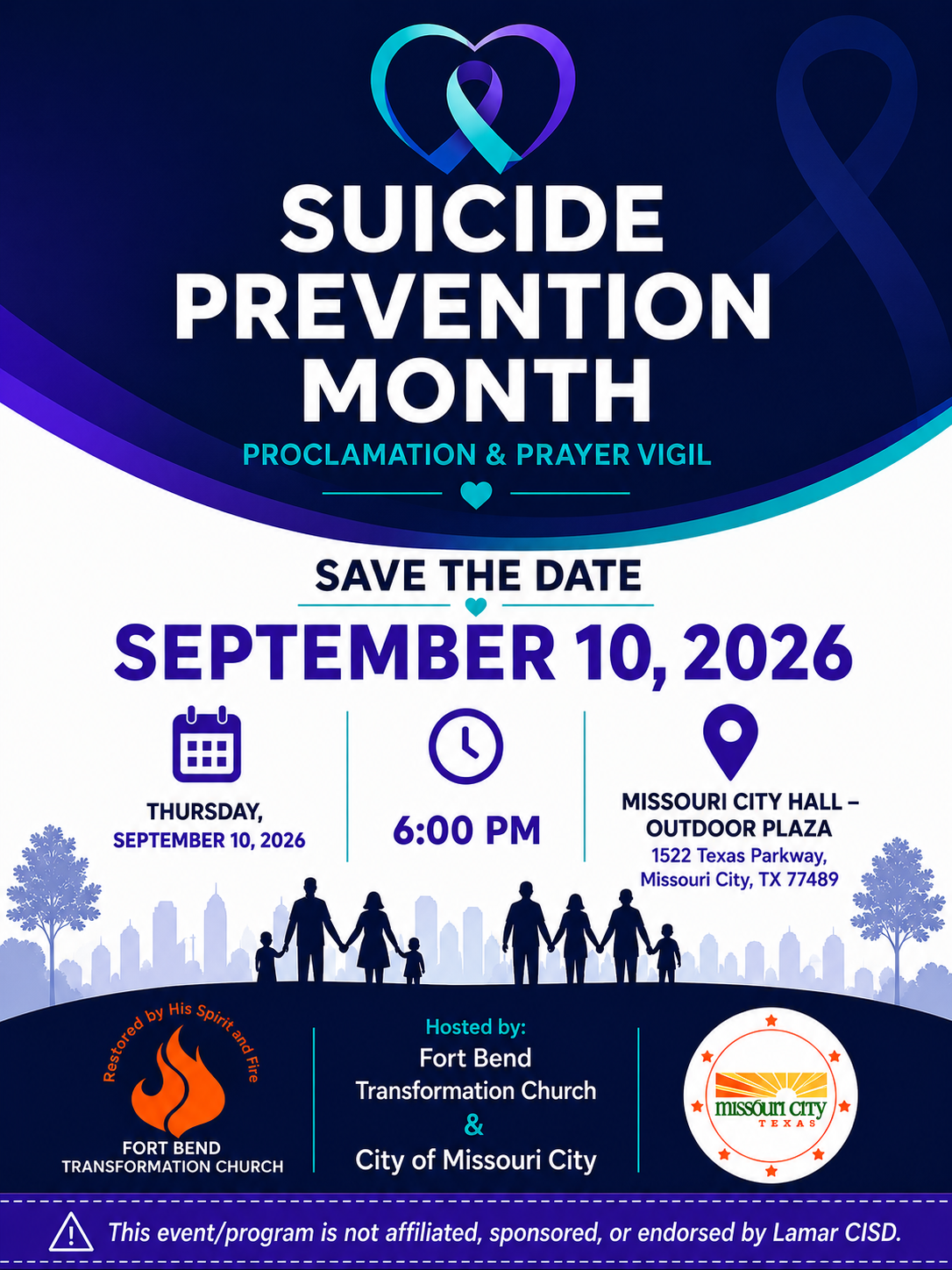
Please see below an event on September 10, 2026:
Fort Bend County Behavioral Health Services (BHS) was established by the Fort Bend County Council of Judges in October 2010. The department was restructured in December of 2018 to report to Fort Bend County Commissioners Court. Dr. Almeida, a licensed psychologist, is the founding director of the department.
Our staff include licensed psychologists and a psychological associate, a developmental psychologist, a licensed professional counselor, case managers, project/grant management staff, jail diversion coordinator as well as administrative support staff.
The department was created to assist in addressing the needs of those with mental illness who come into contact with our justice system. Over the years, Behavioral Health Services has expanded to begin to address those in the community who are high-risk of involvement in the justice system. The department also works with the youngest victims of abuse and neglect in an attempt to heal trauma and support family reunification when possible. Working collaboratively with the justice system, health and human services, behavioral health providers, county offices, schools, and the community, BHS continues to increase the awareness of the needs of our most vulnerable populations and guide systems to work collaboratively to better address those.
Fort Bend County Behavioral Health Services works to increase awareness, services and supports to address the complex needs of persons with behavioral health disorders involved in the legal system or at risk of involvement.
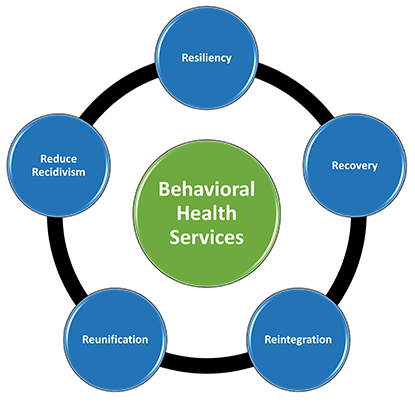
Collaboratively work with the courts, criminal justice, other county departments, behavioral health providers and community organizations to develop needed services to support at risk individuals with behavioral health disorders. Our goals are to foster resiliency, reduce recidivism, support reintegration, recovery and family reunification.
Fostering and building resiliency among persons with behavioral health disorders, first responders, and communities.
Supporting the recovery of persons with behavioral health disorders.
Assisting persons with services to help reintegrate into the community.
Supporting and rebuilding a healthy parent-child relationship.
Working collaboratively across systems to reduce the reincarceration of persons with mental illness by providing needed supports, and identifying gaps in services and systems.
Main Phone: 281-238-3079
Fax: 281-238-0218
Email: bhsdept@fbctx.gov
Website: https://www.fortbendcountytx.gov
https://form.fortbendcountytx.gov/Behavioral_Health_Services_Referral.html

1517 Eugene Heimann Circle
Suite 400 - 2nd Floor
Richmond, Texas 77469
This website has been established to serve only as a supplement to the official documents, information, and services available from the County’s governmental offices. While every effort has been made to offer the most accurate and current information available, the information included in this website has been compiled by County staff from a variety of sources and is subject to change without notice to the user.
Information is provided on this website on an “as is” basis. Fort Bend County, its employees, officers and agencies make no representations or warranties of any kind regarding the completeness, accuracy, reliability, currency, or suitability of the information, products, services, or graphics contained herein. Users of this website are responsible for determining these characteristics in relation to official County documents and the user’s individual needs.
The County’s web pages are not a public forum, and are not intended as an outlet for public speech or expression of individual opinion, irrespective of viewpoint or content, whether by posting or linking.
SOURCE: A Diversion Program for Adolescents
Successful Outcomes Using Resiliency for Child Empowerment
The goal of the SOURCE program is to assist, empower, and provide alternatives to adolescents (ages 11-19) and families with behavioral health needs. We service youth with mental illnesses, intellectual and developmental disabilities (IDD), and substance abuse, who are at risk of being involved, or are currently involved in the juvenile justice system.
SOURCE seeks to decrease barriers and assist youth and families with appropriate services to meet their needs. Our goal is to work collaboratively with families to reduce risks, build strengths and resiliency, and support the youth of Fort Bend County.
Follow-up Services: Staying connected with youth and families after discharge from the program is a critical part of our program. Follow up services are provided to the youth and families at various intervals up to one year to assess post discharge functioning and assist with additional services if needed.
SOURCE is:
SOURCE provides:
Scan QR Code or Fill Out Referral Form: https://form.fortbendcountytx.gov/Behavioral_Health_Services_Referral.html
For questions or assistance, please call: 281-238-3079
Questions and Inquiries: BHSdept@fbcx.gov