
Prison Rape Elimination Act 2003 (PREA)
Allowed Content types
Prison Rape Elimination Act 2003 (PREA)
Detention Center Recreation Program
The Recreation Department of the Fort Bend County Juvenile Detention Center is now officially in its 14th year of operation. During the course of this wonderful journey, we have experienced many highs and very few, if any, low points.
The Recreation Department continues to start the “juvenile justice experience” with a Monday through Friday early morning session of physical training (PT). PT begins at 0615 for all juveniles, male and female. Juveniles learn the proper method and execution of rotation, stretching and calisthenics exercises. The type of exercises and the specified number of repetitions for each exercise have been carefully selected so as not to cause any unnecessary harm or injuries. The overall regimen is designed to promote and maintain a minimum standard of fitness while in the detention center.
Once residents have completed morning PT and breakfast, they prepare for school. All residents who are not immediately enrolled in the detention's school must report to the Recreation Department for S.E.A.L.S. (Self Esteem and Living Skills) programming. SEALS provides residents with an opportunity to brush up on their basic reading, writing and comprehension skills while awaiting enrollment in the detention school. These classes are held in the morning for non-school males and in the afternoon for the females. Textbooks and worksheets are a basic part of the curriculum. Integrated throughout these classes are a variety of lessons in life skills and methods of socialization.
Residents are also offered an opportunity to engage in sports and leisure activities within the Recreation Department. Indoor recreation includes activities such as chess, dominoes, cards and a variety of board games. Residents are also allowed to explore their artistic abilities with many different mediums of art and materials. Past projects have resulted in beautiful acrylic works of art, which can be seen in the front corridor of the detention center. Fox News and the Houston Chronicle – Fort Bend Edition - have both recognized the artistic endeavors of our residents in their newscasts and newsprint.
Detention Medical & Health Services
If the superintendent of the Detention Center believes any juvenile is in need of immediate medical attention, he may require that person to submit to a medical examination.
A Medical Consent Form [PDF] shall be signed by the Juvenile's parent, guardian or conservator at the time of admission to the detention center. Immunizations shall be up to date and documented. A current TB test shall be included.
There is a nurse on site 16 hours per day and a nurse is available to examine the juveniles upon request 24 hours a day. Upon advice from the nurse or in an emergency the juvenile will be transported by detention staff to Oakbend Hospital, Richmond, Texas. In the case of a major medical need such as surgery, the child's parents, guardian or custodian will be responsible for medical expenses. Medical Services for detained youth are provided through a contract basis with a licensed physician.
Prescription medication must be sealed by the pharmacy with pharmacist's initials and number of pills in the bottle. The prescription must be current within the last 30 days. All medications once received are given to the nurse. All medications are administered by the nurse on duty.
We will provide transportation to previously scheduled or medically necessary medical appointments as staffing allows. Please contact the detention center's administrative assistant at 281-633-7363 before scheduling an appointment to check for availability of transportation. We will make every effort possible to make the transport but we require at least a 48 hour notice. Only parents or guardians should attend these medical appointments. For security reasons our staff shall immediately return to the detention center with the child if any other individual attempts to visit the juvenile at the medical appointment.
Medication Procedure
If your child requires medication while in detention, the following procedure must be followed in order for detention staff to accept the medication:
- All medication must be filled within 30 days, and a current prescription must be provided.
- The medication must be counted by the pharmacist and the container sealed and initialed by the pharmacist. Medication will also be accepted in bubble packaging.
- Detention Staff will ask parents or guardians to sign a medication acceptance form.
Detention Center Visitation Schedule
Juvenile Detention Center Visitation
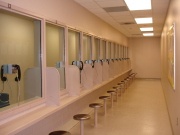
Visitation schedules are given to parents at the time their child is admitted to the Detention Center.
Visitation is at least 15 minutes long. Only visitors listed on the “Authorized Visitation Sheet” will be permitted to visit a detained juvenile. Only the Juvenile Probation Officer can add visitors to the “Authorized Visitation Sheet.”
In order to be admitted for visitation, visitors must provide identification and go through the metal detector. All purses, bags, keys, and cellular phones should be left in the car or secured in a locker. Only personal items on the approved list will be allowed. Please check with the Detention Officer to make sure you are returned any non-approved items.
No food or snacks are allowed during visitation. Children must not be left unattended in the Probation Department waiting area.
The detention superintendent must approve any exceptions to this visitation schedule during normal business hours, Monday-Friday. The child’s attorney will be allowed to visit whenever necessary.
| Visitation Schedule | |
|---|---|
| Monday | 6:00 PM – 8:00 PM |
| Wednesday | 6:00 PM – 8:00 PM |
| Saturday | 9:00 AM – 12:00 Noon 2:30 PM – 4:30 PM |
| Sunday Level 5 |
5:30 PM - 8:00 PM |
| Please Note: The Last Group Will Be Admitted 15 Minutes Before The End Of Visitation. Level 5 Visits Are Held On Sunday from 7:00 PM - 8:00 PM. Call 281-633-7308 prior to visiting in order to verify your child's level. |
|
Rules for Mail
A juvenile shall be allowed to send to and receive mail from their parents/ guardian/ custodian, attorney, and pastor. Any other person must be approved by the juvenile’s trial court. The envelope of all incoming mail shall have the name and return address of the sender.
Each juvenile shall be allowed to send two letters a week; letters to the juvenile’s attorney, clergy, and the court shall not be limited.
All incoming and outgoing mail shall be logged by the Detention secretary before distribution.
Approved incoming mail shall be opened in the presence of the juvenile and inspected for contraband. The letter must have the appropriate return address on the envelope and must be signed. The stamp on the envelope shall be removed. Any monies contained in the mail shall be added to the juvenile’s property inventory sheet and shall be returned to the juvenile upon release with a receipt provided.
If it is suspected that a letter is part of an attempt to formulate, devise or otherwise effectuate a plan to escape from the facility, or violate any state or federal law, the shift supervisor will request the permission of the juvenile to read the letter. If the juvenile does not consent to the reading of the letter, the shift supervisor shall forward the letter, supporting documentation, and reports to the Detention Superintendent. The Superintendent shall then obtain a search warrant to read the letter, if a search warrant is denied by a Judge, the letter shall be given to the juvenile only after letter has been inspected for contraband.
Any incoming mail from a person not on the approved mail list approved by the juvenile’s probation officer or juvenile’s court-ordered rules of probation or parole or against the facilities rules of separation, shall be returned unopened to sender. Any incoming mail that does not have the name and return address on the envelope shall be given to the juvenile’s parent/guardian/custodian. Any incoming mail from a person or persons on a list furnished by the parent, guardian or custodian of individuals who should not have contact with the juvenile will be immediately returned unopened to sender.
Any outgoing mail to an unapproved person shall be returned to the juvenile.
Any mail for a juvenile who has left the facility shall be forwarded to their Probation or Parole Officer for forwarding to the juvenile’s residence.
Withholding Mail
When mail is withheld from the juvenile, the reasons shall be documented and a copy placed in the juvenile’s file.
Mail may be opened by staff only in the presence of the juvenile with inspection limited to searching for contraband.
Phone Privileges
Each detainee is assigned a pin number during the intake process for telephone calls. This number must be used in order to access his/her approved telephone number. Approved telephone numbers are limited to parents or legal guardians. Phone calls are made on Tuesday and Thursday evenings from 7:00 PM until 9:00 PM. If you experience a problem with collect call blockages and pre-paying for a phone call this can be rectified by contacting Securus Correctional Billing Service 1-800-844-6591. https://securustech.net/phone-services.
Rules for Phone Calls:
- The telephone numbers that a juvenile may call shall be limited to his/her attorney and those family members authorized to receive telephone calls.
- The number of calls a juvenile may make a day shall be limited by his/her behavior level.
- The times for making telephone calls shall be according to the center’s “daily schedule”. At no time shall a juvenile be allowed to make a telephone call “on-demand” except to his/her attorney.
- The length of telephone conversations shall be limited by the juvenile’s behavior level except to his/her attorney.
- If at any time it is detected that a juvenile has made a three-way or conference call, the juvenile shall immediately lose all further telephone privileges.
Download / Print
- En Español [PDF]
Detention Center Admissions
Once a child is brought into the center, the juvenile is fingerprinted. Afterwards, the child is interviewed by an intake probation officer and given a physical exam. Any medical, psychological, or special needs are incorporated into the juvenile’s residential plan.
Once the intake procedures are complete, each child is searched, showered, and issued a uniform. Each detainee is assigned to a unit according to age, sex, and the nature of his or her crime. All juveniles are assigned to a private room. The detainees are closely monitored and supervised at all times. Detainees are required to complete daily chores, and personal hygiene is a must.
The juveniles receive three nutritious meals and an evening snack each day. The meals are served in the dining area and snacks are served on the unit.
Level System
Intake Level - All new admissions assigned into the Fort Bend County Juvenile Detention Center will first be placed on Intake Level. During Intake Level, the juvenile must remain on the unit for the first 24 hours after admission. These residents may receive a visit if their intake falls on a visitation day. They may also receive a phone call if it’s phone call night.
Level I - After the new intake has completed his/her 24-hour time frame without any unacceptable behavior, the resident shall begin to participate in all scheduled programming. The bedtime for a Level I resident shall be 7:30 pm. Privileges for a Level I resident include eating in the dining room, recreation, phone calls, and visits.
Level II - After the resident has completed three consecutive days of earning 70 points or better as a Level I, he/she shall move to Level II. The resident shall participate in all scheduled programming. The bedtime for a Level II resident shall be 8 pm.
Level III - After completing three consecutive days of earning 80 points or better as a Level II, the resident shall move to Level III. The resident shall participate in all scheduled programming. The bedtime for a Level III resident shall be 8:30pm.
Level IV - After a resident has completed 3 consecutive days of earning 90 points or better as a Level III, the resident shall move to Level IV. The resident shall participate in all scheduled programming. The bedtime for a level IV resident shall be 9 pm.
Level V / Honors - After a resident has completed 5 consecutive days of earning 90 points or better as a Level IV, the resident shall move to Level V and may submit a letter for acceptance into the Honors Program. If accepted, the resident shall participate in all scheduled programming. The bedtime for a Level V / Honors resident shall be 10 pm. Male residents may be eligible to reside in the dorm. In addition, Honors residents shall be eligible to receive an hour contact visit with their parent(s) or guardian(s) on Sundays. Honors residents shall be allowed to use the phone on non-visitation days for up to 15 minutes. These residents shall also receive an extra snack and shall be provided Kool-Aid with their lunch and dinner meals.
Personal Items
Parents and/or guardians are permitted to provide their children in detention with the following items:
Approved Items:
- 6 pair of white "no-show - short" socks
- 6 pair of white underwear (boxers or briefs)
- 6 white t-shirts
- toothpaste (1)
- shampoo (1) in clear container
- soap with a soap box container
- deodorant
Velcro tennis shoes, as approved by detention staff. Detention residents will be issued a pair of Velcro strap tennis shoes. However, if the parent desires to furnish their child with their own pair of Velcro shoes, this will be allowed provided the shoes contain no shoe laces.
ALL ITEMS MUST BE NEW AND STILL IN THEIR ORIGINAL SEALED CONTAINER - VELCRO TENNIS SHOES ARE THE ONLY EXCEPTION. ITEMS WILL BE INSPECTED BY DETENTION STAFF AND/OR PROBATION OFFICER AND THE CHILD’S NAME WILL BE WRITTEN WITH A PERMANENT MARKER ON ANY PERSONAL ITEMS.
SPECIAL NOTE: DETENTION STAFF WILL MAKE EVERY EFFORT TO SAFEGUARD DETENTION RESIDENT’S PERSONAL ITEMS. HOWEVER, DETENTION WILL NOT BE RESPONSIBLE FOR ANY LOST OR STOLEN ITEMS.
Juvenile Detention Center
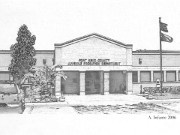
Detention is a secure environment for youth charged with an offense and pending a court hearing. The detention center is designed to provide a safe living environment and a full range of services for the juvenile to include: medical, educational, psychological, and recreational services.
The detention center is an 80 bed facility consisting of both individual rooms and dormitories. There are three dormitories holding 8 juveniles each, with one reserved for the Juvenile Leadership Academy. Juveniles who have been in detention for at least 2 weeks and who have demonstrated exemplary behavior may be placed in these dormitories.
The detention center offers a full range of services including educational, medical and psychological services along with recreational and spiritual programs. The normal day for a juvenile consists of physical training beginning at 6 AM, breakfast from 7:00 AM to 7:30 AM, review of rules and regulation from 7:30 AM to 8:00 AM, school from 8:00 AM until 12:00 AM and from 1:00 PM until 3:00 PM, with recreational programs after 3. The juvenile’s day can end from 7:30 pm to 10:00 pm depending on their current behavioral level. The detention center employs 75 full time staff and 18 part-time staff with positions including Detention Officers, Supervisors, Nursing staff, Administrative Secretary, CSR personnel, Kitchen personnel, and an in house LCDC.
The Detention Center provides three single cell occupancy housing units. Of these three units one is designated for females and two units designated for males housing males from ages 10 through 15 years of age in one unit and 15 to 17 years of age
Juveniles are provided with three daily meals and an evening snack. They are also provided with all necessary clothing items and personal hygiene supplies.
Education
These educational services are provided by the Lamar Independent School District. Juveniles are expected to attend and participate in all educational programs.
Counseling
Counseling services in Post Adjudication Detention, which is provided by in-house services, include a psychological evaluation upon admission including a treatment plan for each child. Program activities include group counseling, weekly individual sessions and family sessions. Parents or guardians are expected to participate in the family sessions. Education is provided about life skills, healthy family functioning, adaptive coping strategies, HIV/Aids awareness and other programs with an emphasis on chemical dependency and substance abuse issues.
- En Espanol [PDF]
Detention Division
Kenneth Johnson, Division Director
122 Golfview Drive
Richmond, Texas 77469
281-633-7400
281-633-7342 FAX
Juvenile Justice
A Child and Juvenile Justice In Fort Bend County
A child who breaks the law may enter a complex world of procedures, places and people called the Juvenile Justice System. In Texas, the ages of juvenile justice jurisdiction are 10 through 16. The Fort Bend County Juvenile Probation Department is locally administered at the county level and the handling of juveniles is strictly regulated by state law.
For minor violations, the police may simply warn the child and parents. However, when further action is needed to protect the public, or to prevent further offenses, the case is forwarded to the Juvenile Probation Department.
Intake
Intake is the process where juvenile probation officials review the facts of the case and determine the appropriate action to take based on the law.
Juvenile probation officials have several options when handling a juvenile referral. A juvenile case may be resolved through a supervisory caution, deferred prosecution, or by formal juvenile court action. When a juvenile is taken into custody, the juvenile officials decide where the juvenile will stay pending juvenile court proceedings. If juveniles are not released to the custody of parents or guardians, they are detained in a secure juvenile detention center.
All cases involving a felony or a misdemeanor offense involving violence to a person or use or possession of a weapon are immediately sent to the prosecutor's office. The prosecutor's office either handles the case, or refers it back to juvenile probation.
Detention
If a juvenile is placed in a detention facility, the juvenile court must hold a hearing on the matter within two working days. If the juvenile is detained on a Friday or Saturday, the detention hearing must be held on the first working day after the detention. At this initial hearing, and subsequent hearings held every ten working days, the judge must determine if there are sufficient grounds or good causes for continued detention.
Victims have the right to have their safety taken into consideration before a juvenile is released. However, detention hearings may take place before the victim has been contacted. You may call the crime victim assistance coordinator for the status of the case and information about victim's rights.
Deferred Prosecution
Some of the youngest, least serious (Class A and Class B Misdemeanor) offenders get a second chance to prove that no further action is needed to prevent future illegal activity. Those who succeed in the three to six month Deferred Prosecution program avoid a formal court hearing and continued involvement with authorities. During that time, the Juvenile must meet certain terms or the case could be referred to the prosecutor's office for subsequent court action. Making restitution to the victim or performing community service may be included in the juvenile's deferred prosecution program.
JJAEP
Mission Statement
The Fort Bend County Juvenile Justice Alternative Education Program (JJAEP) was designed to provide a positive, supportive, and structured learning environment with high expectations for all students. Students are provided a quality education in the areas of affective and cognitive development, while stressing personal development and growth coupled with responsible behavior. This is accomplished in a positive, supportive, safe and orderly environment. It is the final goal of the programs to provide each student with the skills necessary for personal success resulting in the student becoming an integral person in society.
Juvenile Justice Alternative Education Program (JJAEP)
The Fort Bend County Juvenile Justice Alternative Education Program was created pursuant to Senate Bill 1, passed by the Texas Legislature in 1995. The Juvenile Justice Alternative Education Program (JJAEP) provides educational programs for every expelled student. The student may have been expelled for a criminal activity or for serious misbehavior. Students may also be court ordered into this program as a condition of their release or probation.
JJAEP will provide educational services for the following expelled students:
- Mandatory Expulsions - Texas Education Code, Section 37.007(a), (d), & (e)
- Permissive Expulsions - Texas Education Code, Section 37.007(b), (c) & (f)
JJAEP provides the following services for students placed in the program:
Daily Operation
Students placed in the Fort Bend County JJAEP attend school daily, Monday through Friday, 8:00 AM - 4:00 PM.
Teacher / Teacher’s Aides
The Fort Bend County JJAEP has contracted with the Fort Bend Independent School District and the Lamar Consolidated Independent School District for educational personnel. Teachers hired for this program will be certified teachers and may be Special Education and ESL endorsed. When needed, aides may also be used to assist the teacher in the instruction of students.
Academics
The Fort Bend County JJAEP will provide course instruction in the following subjects. Instruction of these courses may be done through both direct instruction and computer based instruction:
- Mathematics
- English
- Science
- Social Studies
- GED - available for students not likely to graduate.
Entrance Testing
Each student will be tested upon admission into the Fort Bend County JJAEP to measure the student’s current tested grade level specifically in the areas of reading and mathematics.
Exit Testing
Each student served in the Fort Bend County JJAEP for a minimum of 90 days will be tested upon exit from the Fort Bend County JJAEP to measure the student’s current tested grade level specifically in the areas of reading and mathematics.
Psychological Services
Students attending the Fort Bend County JJAEP may be required to submit to psychological testing. Testing will be conducted by a licensed psychologist to assist the department in proper services given to the student.
Counseling/Substance Abuse Services
Students attending the Fort Bend County JJAEP may be required to participate in individual, group and or family counseling. The need for counseling services will be determined by the program staff or by the students individual education plan, or as ordered by a Juvenile Judge.
Dress Code
Students placed in the Fort Bend County JJAEP are required to conform to the program’s dress code. Students are required to wear khaki slacks, a grey t-shirt or county issued Phase shirt, and black or white solid colored sneakers.
Student Lunches
Student lunches are provided by the local school district.
Transition Services
Personnel of the Fort Bend County JJAEP will assist the student in preparing for their return back to the expelling school. Personnel of the program will provide a transition plan for the student to the receiving Independent School District.
Probation Services
Students continuing under probation supervision upon completion of the Fort Bend County JJAEP will receive probation services according to the terms and conditions of the student’s probation.
|
Juvenile Leadership Academy |
|
| Arcola Site 400 Coen Road Arcola, TX 77538 832-471-2500 281-431-3420 FAX |
Rosenberg Site 3403 Avenue F Rosenberg, Texas 77471 832-471-2540 281-232-8818 FAX |
Legal Awareness Workshop (LAW)
Legal Awareness Workshop (LAW)
Legal Awareness Workshop (LAW) is an early intervention educational program which targets juveniles who have been referred to the Fort Bend County Juvenile Department for minor offenses.
The workshop provides the juveniles and their parents detailed, educational information about the components and goals of the Texas Juvenile Justice System. The audience learns the role and purpose of law enforcement, the courts, prosecuting and defense attorneys, and the juvenile correctional agencies. The two-hour long program is presented on a monthly basis at The George Memorial Library in Richmond, Texas.
Since its inception in January 2000, there have been over 20,000 juveniles and their family members present at the Legal Awareness Workshop.
Intake Division
Intake Division
Juveniles arrive at the Fort Bend County Juvenile Probation Department detention center around the clock. They may be sick, intoxicated, injured, depressed or violent. Critical decisions must be made on the spot. The purpose of the Intake Division is to accept, review and make detention admission determinations on formal referrals to the department based on the nature of the referral, information obtained from the juvenile and their parent/ guardian, school, and other current and historical information. Intake officers are skilled in crisis intervention, information gathering and assessing cases.
Many times, a juvenile is released to their parent/guardian pending a court hearing. However, when a determination has been made to detain a juvenile, they are processed by an Intake Officer. All juveniles are assessed for any physical and/or mental health needs which are immediately addressed by staff including medical, psychiatry, and detention staff for appropriate supervision. The parent/guardian is notified immediately that the juvenile will be remaining in custody and provided with information on an initial detention hearing.
The Intake Officer gathers information to present at the juvenile’s initial Detention Hearing. The information includes the juvenile’s current and historical social history, home dynamics, school information including educational needs, peer association, current and past drug history if any, and any other risk factors identified. A recommendation on whether to release the juvenile based on at least one the five criteria in alignment with Chapter 54 Section 1 of the Texas Family Code is presented to the Juvenile Court and District Attorney.
The Intake Division also processes non-detained referrals also known as paper referrals. Once a paper referral is received, the Intake Officer will contact the juvenile and their parent/guardian for an office visit notifying them of the alleged offense. Current and social history information is gathered from the juvenile, parent/guardian, as well as community stakeholders. The Intake Officer will refer the juvenile to services to address their identified needs such as individual or drug counseling.
The juvenile’s supervision will be transferred after their case has been formalized and/or they have an initial Detention Hearing to the Court Unit for supervision to continue until the juvenile’s case is disposed of. The Intake Unit also supervises juveniles placed on Deferred Adjudication.
The Intake Unit consists of a Supervisor, nine Juvenile Probation Officers which includes a Lead Officer, Detention Representative, and a Crisis Intervention Officer. There is also an Administrative Assistant and a Spanish Translator.
Lupe New, Supervisor
122 Golfview Drive
Richmond, Texas 77469
Phone: 281-633-7400
Fax: 281-633-7344
Stephanie Jackson, Division Director
122 Golfview Drive
Richmond, Texas 77469
Phone: 281-633-7400
Fax: 281-633-7344